Copy this link
https://www.bbc.co.uk/news/world-middle-east-52428998 Read more about sharing. Close share panel Related Topics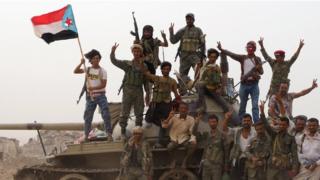 Image copyright Reuters Image caption Separatists took control of the government's temporary capital Aden in August last year
 Separatists in southern Yemen have declared self-rule, breaking a peace deal signed in November with the internationally recognised government.
The Aden-based Southern Transitional Council (STC) declared a state of emergency, saying it would govern the port city and other southern provinces.
The STC is supported by the United Arab Emirates.
The Saudi-backed Yemeni government warned of "dangerous and catastrophic consequences".
"The announcement by the so-called transitional council of its intention to establish a southern administration is a resumption of its armed insurgency... and an announcement of its rejection and complete withdrawal from the Riyadh agreement," Foreign Minister Mohammed Al-Hadhrami said in a statement.
The two sides signed a power-sharing deal that was described by the UN as an important step towards ending Yemen's civil war.
A Saudi-led coalition launched a military intervention in support of the Yemeni government in 2015, after Houthi rebels seized the capital Sanaa. The UAE is a member of the coalition but supports the southern separatists.
In August last year, the STC took over the government's temporary capital, Aden, after accusing the administration of mismanagement.
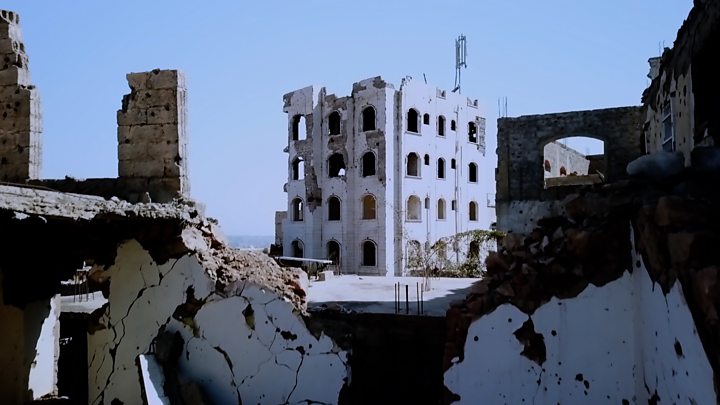 Media playback is unsupported on your device Media captionInside Yemen's dangerously divided 'city of snipers'Why is there a war in Yemen?
Yemen has been devastated by a conflict that escalated in March 2015, when the Houthis seized control of much of the west of the country and forced President Abdrabbuh Mansour Hadi to flee abroad.
Alarmed by the rise of a group they believed to be backed militarily by Iran, Saudi Arabia and eight other Arab states began a campaign aimed at restoring Mr Hadi's government.
At the start of the war, Saudi officials forecast that it would last only a few weeks. But five years of military stalemate have followed.
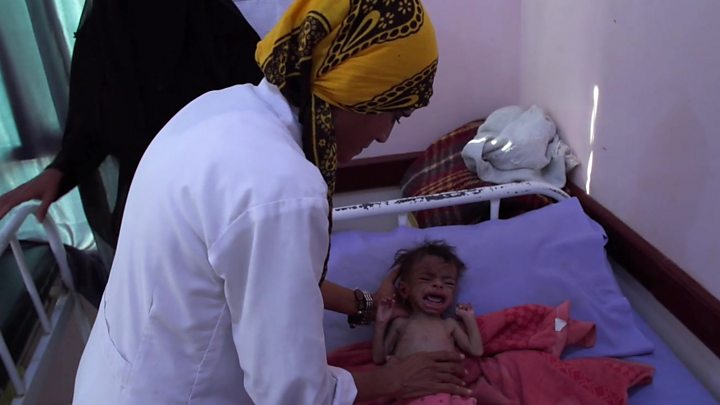 Media playback is unsupported on your device Media captionThe doctor on the front line after years of war in Yemen
The UN has verified the deaths of at least 7,500 civilians, with most caused by coalition air strikes. But a monitoring group has estimated that the fighting has killed 112,000 people, including 12,600 civilians.
The fighting and blockade have also triggered the world's worst humanitarian crisis.
Some 24 million people - 80% of the population - need humanitarian assistance, and almost 10 million are considered "one step away from famine".

No comments:
Post a Comment